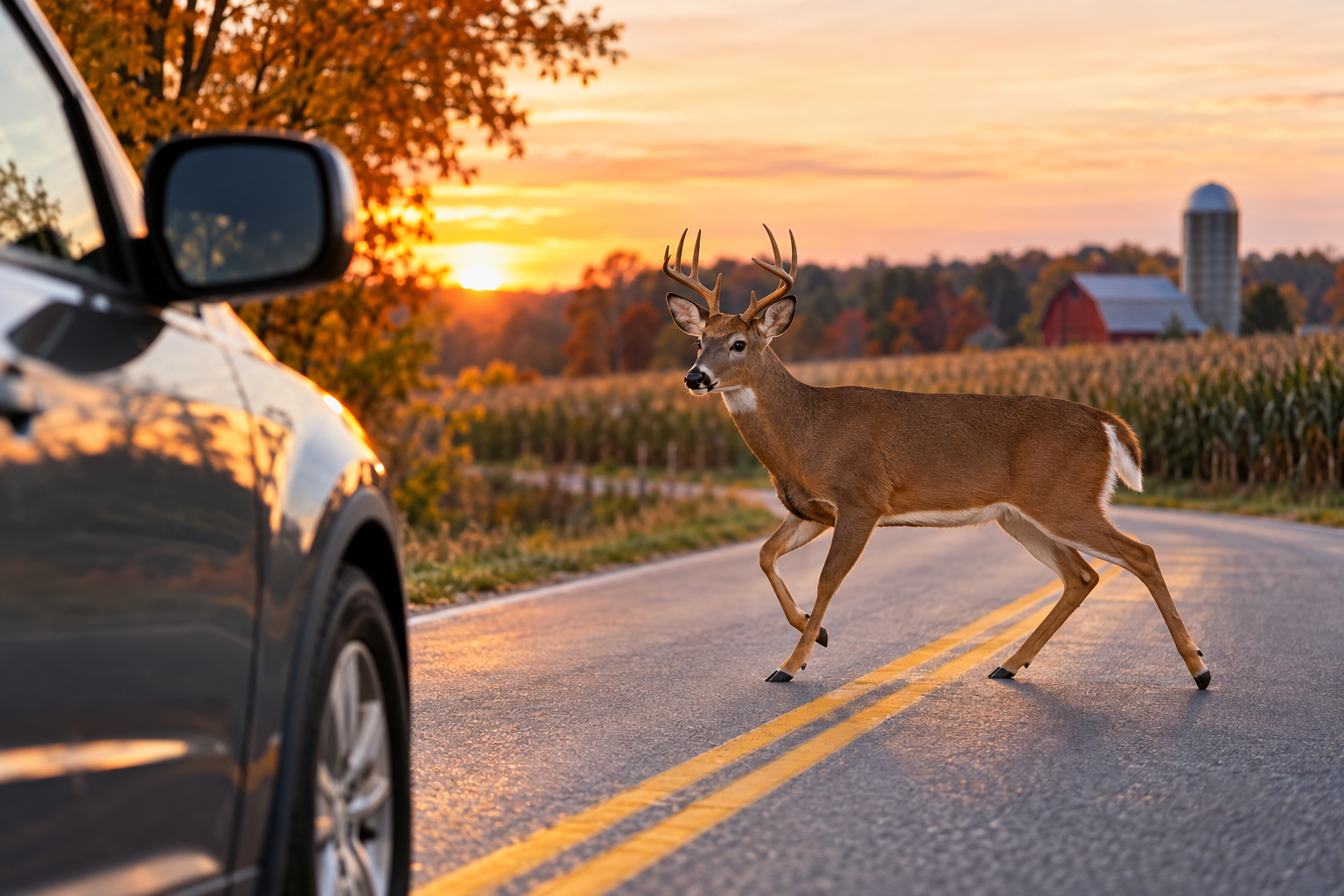
 I’ve noticed plenty of deer in farm fields this summer. These knuckleheads will soon be playing in traffic. If one crosses your path, brake firmly and stay in your lane. Swerving can cause a worse crash.
Hitting a deer can leave you shaken. If you need help at the scene, call 911. Tell the dispatcher where you are and what happened—even if all you can say is, “I hit a deer.” They can help you focus, coordinate medical help, and guide your next steps. Ask about arranging a tow and getting a police report number.
Michigan requires immediate police reporting for crashes involving injuries or apparent property damage totaling $1,000 or more — including damage to your car.
A running engine does not mean a safe car. From a safe location, check for leaking fluids, warning lights, steam, damaged tires, loose parts, and broken lights. When unsure, have it towed. Driving with a damaged radiator can ruin your engine. Additional avoidable damage may not be covered.
Ask your insurer whether it arranges towing or reimburses you after you or the police arrange it. Save your receipt and confirm where your car is going.
Damage from hitting a deer generally falls under comprehensive coverage, subject to your deductible and policy terms. “PL/PD” won’t pay for your car’s damage. A police report helps document the loss, but it isn’t always required for insurance payment.
For injuries, Personal Injury Protection (PIP) benefits depend on eligibility and coverage choices. Unlimited PIP medical provides the greatest protection against covered medical expenses. Lower limits or opting out can leave you relying on other coverage or paying bills yourself.
A passenger generally looks to their own, a spouse’s, or a resident relative’s auto policy for PIP. Eligible people without applicable coverage may turn to the Michigan Assigned Claims Plan, with medical benefits capped at $250,000.
Before deer season, have a good conversation with your agent about your vehicles, household members, deductibles, and coverage. Don’t wait until a crash to ask. Knowing what to do—and what protection you have—can make a frightening moment easier to handle.